

Electrolysis is the only hair removal method the FDA and the American Medical Association recognize as truly permanent. A fine, sterile probe is inserted into each hair follicle, where a precise electrical current destroys the cells responsible for hair growth. Once a follicle is correctly treated, it can never produce hair again — making electrolysis effective on all hair colors, textures, and skin tones.
Electrolysis is ideal for anyone seeking permanent hair removal, but it's especially valuable for those dealing with hormonally or medically influenced hair growth:
Electrolysis requires commitment and consistency, but for most clients it delivers something no other method can: true, lasting freedom from unwanted hair.
Electrolysis is the only hair removal method the FDA recognizes as truly permanent — not long-lasting, but permanent. Here's what sets it apart:
If you're done managing unwanted hair and ready to be finished with it, electrolysis is the only method that can get you there.
Electrolysis is permanent, but it's rarely a one-and-done process for any given area — and that's completely normal. Here's why multiple sessions are needed, and how we structure them for the best results:
Why it takes more than one session:
How often to come in:
Stick to your treatment plan and the hair in that area will eventually stop growing entirely — leaving you with smooth skin for good.
Your first appointment is a consultation — our strategy session before any treatment begins. Electrolysis isn't one-size-fits-all, so we take the time to build a plan tailored specifically to you. Here's what we'll cover:
By the end of your first visit, you'll leave with a clear treatment plan and a realistic picture of what to expect.
Session length varies depending on the treatment area and hair density — typically anywhere from 15 minutes for small areas like the upper lip to 90 minutes for larger areas like the legs or back. Pricing is based on session length, starting at $55 for 15 minutes up to $225 for 90 minutes. Because each follicle is treated individually, we never rush the process. Your treatment plan will give you a clearer estimate of what to expect for your specific area.
Yes, and the distinction matters. Electrolysis is the only hair removal method recognized by both the FDA and the American Medical Association as truly permanent. Laser, by contrast, is legally classified as permanent hair reduction — not removal. That's not a technicality; it's a meaningful difference in what you can expect long-term.
Here's why: laser targets the pigment in the hair, which means it's less effective on light, gray, red, or blonde hair — and results can fade over time. Electrolysis works differently — a tiny electrical current is delivered directly to the growth cells of each follicle, destroying its ability to produce hair regardless of color or skin tone. Once a follicle is successfully treated, it cannot grow hair again. Ever.
If you're weighing your options, that's the clearest way to understand the difference: laser reduces, electrolysis removes.
The short answer: you'll feel something, but it's manageable. Most clients describe it as a quick "zap," a "prickle," or a warm sting — somewhere in the range of a small mosquito bite, though everyone's threshold is different.
The probe itself sliding into the follicle is usually unfelt. The sensation happens in the brief moment the electrical pulse is applied to disable the follicle.
The good news is we can fine-tune the equipment to find a level that's effective for your hair while staying comfortable for your skin. Most clients settle in quickly once they know what to expect.
Electrolysis is safe and effective for virtually any area where unwanted hair grows. Whether you're reshaping your brows or clearing larger body areas, we treat it all.
Face & Head Eyebrows · Upper & Lower Lip · Chin & Jawline · Sideburns & Cheeks · Hairline · Neck
Body Underarms · Chest & Breasts · Abdomen · Back · Arms & Legs · Hands & Fingers · Feet & Toes
Please note: we do not treat the genital area or buttocks.
Not sure if your area is treatable? Just ask — if hair grows there, electrolysis can likely help.
Before your appointment
After your appointment
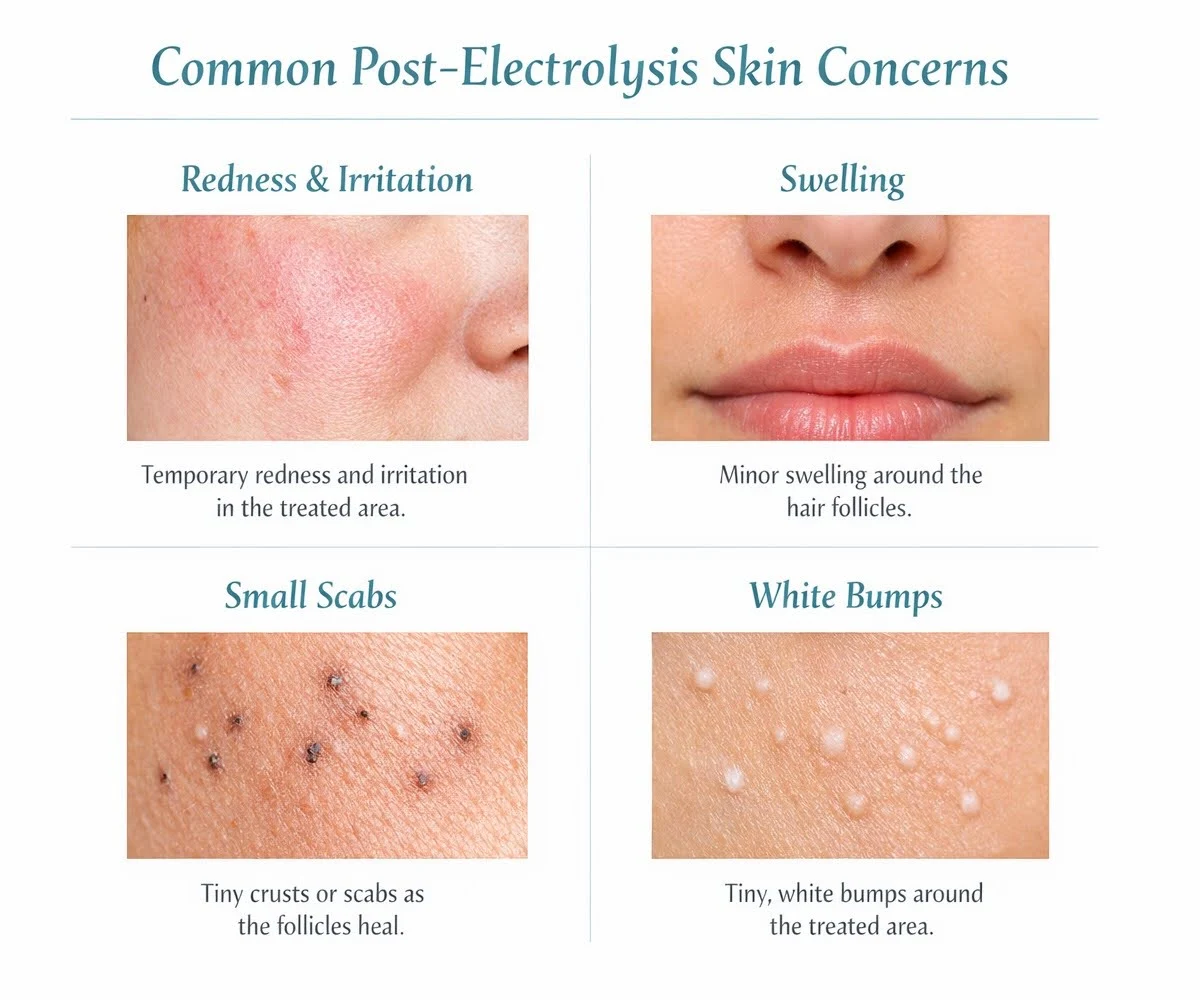
Electrolysis is generally a safe and effective method of permanent hair removal; however, as with any cosmetic procedure, there are potential side effects and complications that may occur.
These may include but are not limited to: redness, bruising, mild to severe swelling, tenderness, irritation, or discomfort at the treatment site; delayed skin reactions such as prolonged redness, swelling, or sensitivity appearing hours or days after treatment; pinpoint scabbing or crusting; temporary skin discoloration (including hyperpigmentation or hypopigmentation); small pustules or acne-like breakouts; histamine reactions such as hives or raised bumps; blistering; and, in rare cases, infection, scarring, or changes in skin texture.
The severity and duration of these reactions can vary based on individual skin sensitivity, the area treated, and adherence to aftercare instructions. While many side effects resolve within a few hours to several days, some reactions may be delayed or persist for a longer period.
Some skin response after electrolysis is completely normal and expected. Here's what you might notice and how to manage it:
Redness & irritation — the most common response. Apply a cool compress for 5–10 minutes as needed, use a gentle fragrance-free product, and avoid heat, sun, and active skincare for 24–48 hours. Redness typically fades within a few hours to a day.
Mild swelling — normal, especially on the face. Use cold compresses intermittently on the day of treatment, keep the area clean, and avoid touching. Usually resolves within 24–48 hours.
Small scabs — tiny scabs may form as follicles heal. Do not pick them. Keep the area clean and lightly moisturized and allow scabs to fall off naturally to avoid pigmentation or scarring. Healing typically takes 7–10 days.
White bumps — a normal skin response in some clients. Cleanse gently, apply an antiseptic or calming product, and avoid heavy makeup or occlusive products. Usually resolves on its own within a few days.
If any symptoms worsen, persist beyond the expected timeframe, or show signs of infection, please reach out to your provider.
In case of a medical emergency, call 911 immediately.
Absolute Contraindications — No Treatment Possible
The following conditions prevent electrolysis treatment entirely. Please notify us before booking if any of these apply.
Conditions Requiring a Physician's Written Release
The following conditions do not automatically prevent treatment, but we require written clearance from your physician before your first appointment.
Conditions Requiring a Wait Before Treatment
The following conditions do not prevent treatment, but we require a waiting period before the treatment can be provided.
Medications That May Affect Eligibility for Treatment
Certain medications require a waiting period or physician clearance before treatment can safely proceed. Please disclose all medications at your intake appointment.
Important Notice Regarding This List
This list of contraindications is not exhaustive and is intended as a general guide only. Medical history is complex and individual, and conditions or medications not listed here may still affect your eligibility for treatment.
MVP Electrolysis reserves the right to request a physician's written clearance before performing any electrolysis or skincare service, at our sole discretion, regardless of whether your condition or medication appears on this list. We may also pause or discontinue a treatment series at any time if new health information comes to our attention that raises a safety concern.
Your safety is our priority. If you have any questions about your eligibility before booking, please contact us directly.